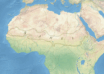
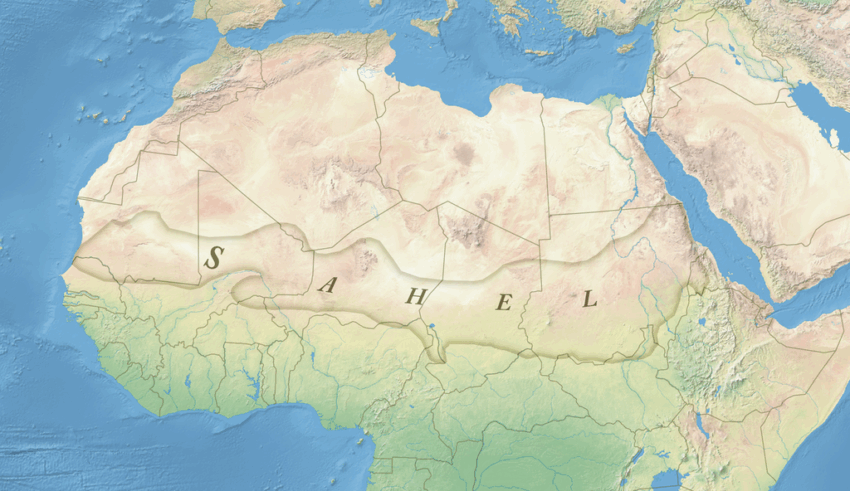
The climate crisis, coupled with population growth, extensive farming, and overgrazing, has eroded the soil and degraded ecosystems in Africa. Such human activities combined with severe droughts have caused the Sahara Desert to expand south into the Sahel, a 6,000-kilometre belt of semi-arid savannah stretching from Senegal, Niger, Mali, Chad, to Sudan, which is home to some 400 million people (Karambiri, 2024). As desertification is rapidly spreading, the Sahel region is standing as the frontline of one of the world’s most urgent and overlooked environmental crises
Overgrazing, deforestation, climate change, and poor land management have created a vicious cycle that transforms arable land into desert-like conditions. According to the United Nations, over 80% of the land in the Sahel is now degraded, affecting more than 100 million people (Karambiri, 2024). Indeed, farmers and herders are losing their means of survival, leading to biodiversity degradation, water scarcity, food insecurity, and forcing mass migration. In some regions, environmental degradation is fuelling conflict as communities compete over dwindling resources: in particular, critical resources as Lake Chad are becoming vulnerable points of tensions, as the water availability is shrinking more and more.
Africa is putting all its efforts into countering the spread of the Sahara Desert through a series of sustainable projects, such as the Great Green Wall, an African Union initiative that aims at restoring the fertility of degraded agricultural and pastoral lands. The project involves a wide range of approaches, from tree planting, assisted natural regeneration, water conservation, to sustainable land management.
Local communities are also experimenting with sustainable practices like agroforestry and water harvesting, drawing on their Indigenous knowledge to support the natural restoration of the land. This helps communities adapt to the climate crisis by boosting agricultural production even in drought years, leading to economic empowerment and strengthening community cohesion. In Niger, for example, local communities’ efforts led to the restoration of over 6 million hectares, about 50% of the country’s cultivated area (Karambiri, 2024).
However, Africa is not able to counter desertification by itself: the scale of the crisis is far too big to finance back strategies by the continent alone, considering also that many more projects are stalling due to lack of funding, coordination, or political instability. Also, the Great Green Wall has found obstacles, as many trees have died due to a lack of water or poor adaptation to local conditions. Efforts to raise global awareness and generate funding for restoration have substantially helped the project, though: one such initiative is the Regreening Africa programme, which has engaged over 500,000 households across eight African countries in land restoration efforts. The programme provides training in sustainable land management, tree planting, climate-smart agriculture, and soil and water conservation techniques.
The spread of the Sahara Desert is not just a regional problem, is a global one. As land becomes uninhabitable, migration to Europe increases, Moreover, the Sahel is a climate frontline. If Africa can successfully restore its degraded lands, it could remove up to 250 million tons of carbon from the atmosphere annually (Karambiri, 2024). According to the United Nations, the Great Green Wall initiative still requires at least 33 billion US dollars in funding to achieve its 2030 target, as such, global support is fundamental.
Africa has the vision, the will, and many great projects, but it lacks the financial support. Without international solidarity, desertification might be slowed down, but it will not be halted.
Resources:
Karambiri M. (2024) Regreening the desert: land and soil restoration in the Sahara and Sahel, published by Heinrich Boll Stiftung Brussels, available at: Regreening the desert: land and soil restoration in the Sahara and Sahel | Heinrich Böll Stiftung | Brussels office – European Union
By The European Institute for International Relations